
The Dangers of Noise-Induced Hearing Loss and How to Protect Your Ears

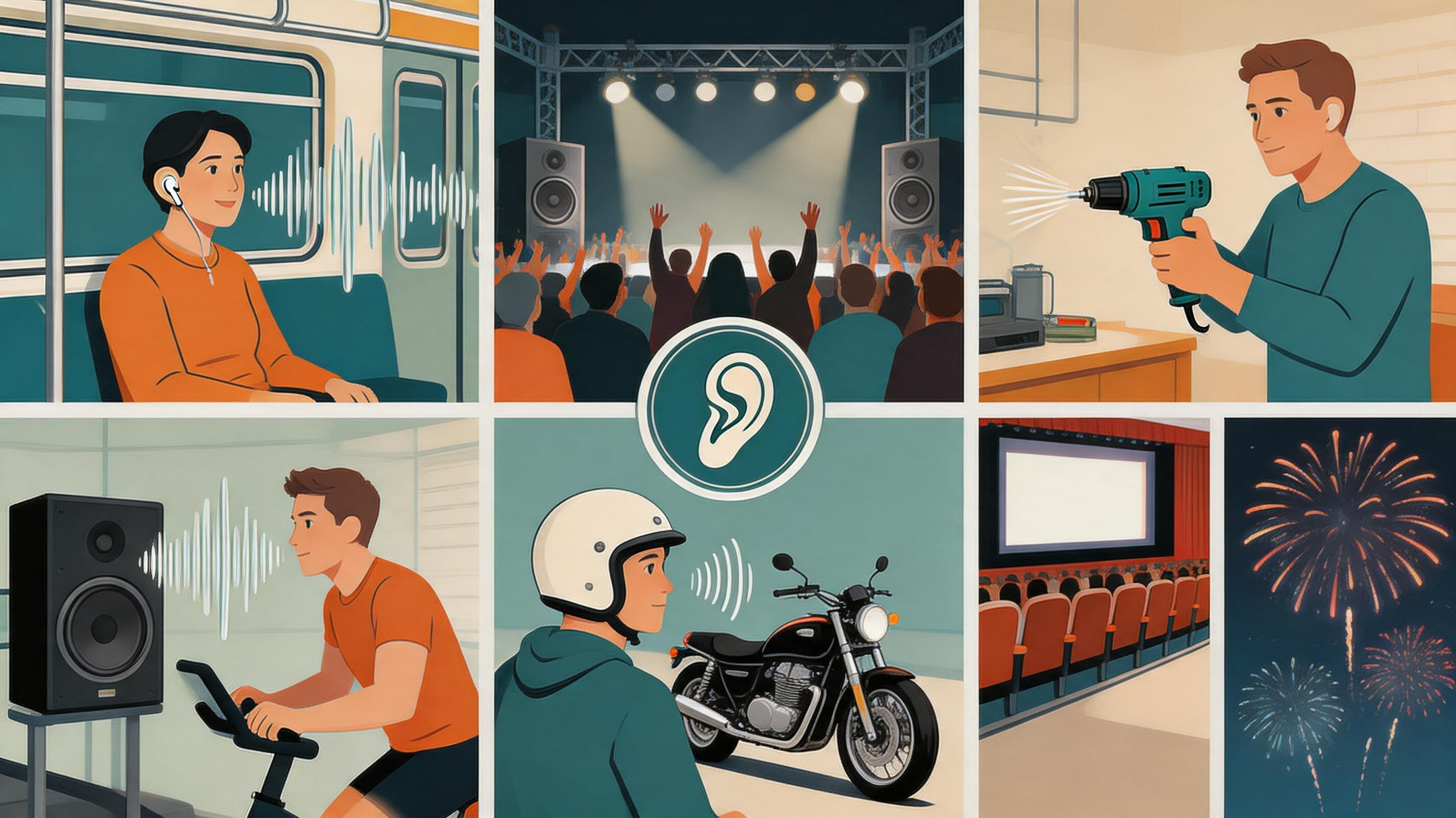
Noise-induced hearing loss is often treated like something that only happens to people working around heavy machinery or standing next to explosions. In reality, it can start much closer to home. Loud earbuds on the commute, regular concerts, noisy gyms, power tools in the garage, weekend motorbike rides, fireworks, and even repeated movie-theater visits can all take a toll on your hearing over time.
That is what makes this kind of hearing loss so dangerous. It does not always feel dramatic in the beginning. Sometimes it shows up as ringing after a concert, a strange sense that speech sounds dull, or the feeling that everyone around you has started mumbling. It is easy to brush off. But if loud sound keeps showing up in your routine, those “small” moments can turn into lasting damage.
If you have been searching for answers about noise-induced hearing loss, whether loud music can damage hearing, or how to protect your ears before things get worse, this guide will walk you through it in plain English. You will learn what NIHL is, why it is so easy to underestimate, what warning signs to watch for, and practical steps to help protect your hearing in everyday life.
Quick answer: Noise-induced hearing loss can happen after one extremely loud sound or after repeated exposure to loud sounds over time. It may feel temporary at first, but some damage can become permanent. Ringing in the ears, muffled hearing, difficulty following speech, and turning the volume up more than usual are common warning signs.
Why this matters: NIHL is largely preventable, and prevention is crucial because there is no medical or surgical cure once the damage becomes established.
Schedule Your Free ConsultationWhat is noise-induced hearing loss?
Noise-induced hearing loss, or NIHL, happens when loud sounds damage the delicate structures in the inner ear. That damage can come from one intense burst of sound, such as fireworks or an explosion, or from repeated exposure over time, like loud headphones, concerts, motorcycles, or noisy equipment.
The reason people often miss it in the early stages is that it does not always arrive as a clear-cut “something is wrong” moment. It can build gradually. At first, you might only notice that crowded places feel harder work than they used to, or that voices on the phone are less clear. Over time, those small frustrations can become much more noticeable.
Why noise-induced hearing loss is more serious than people think
The biggest problem with NIHL is that people get used to the warning signs. Ringing after a concert can start to feel normal. Turning the TV up a bit more can seem harmless. Needing people to repeat themselves in a restaurant may be blamed on bad acoustics. The trouble is that your ears do not care whether you have normalized the problem or not.

One of the most concerning aspects of loud-sound exposure is that your hearing can seem to recover while some of the harm persists. Research from NIDCD notes that even when hearing feels better again after 16 to 48 hours, there may still be residual long-term damage.[1] So while the symptoms may fade, the habit that caused them can still leave a mark.
This is why noise-induced hearing loss deserves real attention. It can affect speech clarity, confidence in social settings, listening comfort, and your ability to follow conversations in background noise. And once those changes start affecting daily life, many people find themselves searching for hearing support far sooner than they expected.
How loud is too loud for your ears?

This is the question most people really want answered, and the short version is simple: both loudness and time matter. Sounds at or below 70 dBA are unlikely to cause hearing loss even after long exposure, while long or repeated exposure at or above 85 dBA can cause damage. CDC offers an easy real-life rule: if you need to shout to be heard by someone nearby, the environment may be loud enough to harm your hearing.
That matters because risk is not limited to obviously extreme environments. A sound that feels manageable for a short time can still become a problem if you stay in it for long enough, sit too close to it, or return to it again and again.
| Everyday sound source | Approximate level | Why it matters |
|---|---|---|
| Normal conversation | 60–70 dBA | Usually, a safe baseline for everyday listening.[1] |
| Movie theater | 74–104 dBA | Can creep into risky territory depending on duration and volume.[1] |
| Motorcycles and dirt bikes | 80–110 dBA | Can reach harmful levels surprisingly quickly.[1] |
| Headphones at maximum volume, concerts, sporting events | 94–110 dBA | Common leisure exposures that can contribute to NIHL over time.[1] [3] |
| Sirens | 110–129 dBA | Extremely loud, especially when close to the ear.[1] |
| Fireworks | 140–160 dBA | Impulse sounds at this level can cause immediate, permanent injury.[1] |

Can loud music and headphones really damage your hearing?
Yes, and this is one of the biggest modern risk areas. It is easy to think of loud music as harmless because it is familiar and enjoyable, but your inner ear responds to volume, not whether the sound is fun. Earbuds and headphones become even riskier when people turn them up to drown out traffic, trains, gym noise, or office chatter.
This is not just a fringe issue for a few heavy music listeners. NIDCD points to WHO estimates suggesting that more than half of people aged 12 to 35 use personal audio devices at volumes that may threaten hearing, and that frequent entertainment-venue visitors are also at elevated risk.[3] For many readers, that makes NIHL less of a medical abstraction and more of a lifestyle reality.
Can noise-induced hearing loss be reversed?
This is often the first thing people search after a loud night out, a festival, or a day around machinery. The difficult truth is that once noise-induced hearing loss is established, you should not expect a quick medical fix. CDC states that there is no medical or surgical treatment for NIHL.[2]
That does not mean every odd sensation after a loud sound is automatically permanent. Some people notice temporary ringing or muffled hearing and feel better later. But that temporary improvement should not be taken as proof that everything is fine. It is much smarter to treat it as a warning that your ears have been pushed too far and need better protection from that point on.
What are the warning signs after loud noise exposure?

The early signs are often subtle, which is exactly why they get ignored. Speech may sound less crisp. Busy places may feel more exhausting. You may find yourself checking whether the TV volume has somehow changed. You may feel as if people around you are not speaking clearly anymore.
According to NIDCD, common warning signs include muffled or distorted sound, difficulty understanding speech, trouble hearing on the phone or in noisy places, needing to turn up the television, and tinnitus, such as ringing, buzzing, or roaring in the ears.[1] If any of those sound familiar after repeated loud-sound exposure, it is worth taking seriously.
How to protect your ears from noise-induced hearing loss

If you are wondering how to protect your ears without making your life overly complicated, the reassuring news is that the basics are simple. They just work best when you use them consistently. Lower the volume where you can, reduce time spent in very loud environments, create some distance from the sound source, and use hearing protection when loud noise is unavoidable.[1] [2]
Turn the volume down before it becomes a habit
Small volume choices add up. Lowering your headphone volume, giving your ears a break from background entertainment, and resisting the urge to max out in noisy places can make a real difference over time.
Move farther away from the sound source
At concerts, fireworks displays, fitness classes, tracks, and worksites, distance matters. Even moving back from speakers or noisy machinery can help reduce the load on your ears.
Take breaks from loud sounds
Your ears benefit from recovery time. If you are in a loud venue, stepping outside for short breaks is not being dramatic. It is simply giving your hearing a better chance of not being overwhelmed.
Use earplugs or earmuffs when noise is part of the plan
If you already know an activity will be loud, go in prepared. Concert earplugs, earmuffs for DIY work, and proper protection for shooting or motorsports are sensible choices, not overreactions. CDC and NIDCD both recommend hearing protection when loud sound cannot be avoided.[1] [2]
Protect children’s ears as well
Children are exposed to the same world of loud events, devices, and entertainment, but they rely on adults to spot the risk. Fireworks, sporting events, loud toys, and noisy family activities are all worth thinking about ahead of time.
Do not ignore changes that keep coming back
If ringing, muffled hearing, or difficulty hearing in noise keeps showing up after exposure, do not wait for it to become part of your normal. That is usually the moment when prevention needs to turn into action.
Seek urgent medical advice if you have sudden hearing loss, a clear one-sided change in hearing, severe dizziness or vertigo, ear pain, ear discharge, or a major new change in tinnitus after loud sound exposure. Those symptoms need prompt medical assessment and should not be treated as routine hearing-aid-shopping questions.
What should you do if noise may already be affecting your hearing?
Start by taking the pattern seriously. Reduce further exposure, use hearing protection more consistently, and arrange a professional hearing check if the symptoms persist, keep returning, or are beginning to affect daily life. That matters whether the problem shows up at work, after leisure activities, or simply in the way conversations feel harder than they used to.
A proper hearing assessment can help you understand whether you are dealing with temporary irritation, a more meaningful hearing change, or a broader hearing-health issue that needs follow-up.
How can Auzen help if your hearing has changed?
If a loud sound has already started affecting your hearing, Auzen recommends seeking medical expertise as soon as possible.
Once you have seen an ENT, our service is built for people who want expert help without the friction of a traditional high-street process. That includes free consultations, remote hearing care, professional support, and access to current prescription technology from leading brands.
For readers who are beginning to compare options for the best hearing aid, Auzen’s range is also organized to make the decision easier to navigate. Instead of throwing you straight into technical jargon, it helps connect hearing needs with technology level and budget.[4]
Essential Line – from £790
A strong entry point into prescription hearing care for quieter lifestyles, home listening, and readers who want a more affordable professional option.[4]
Comfort Line – from £890
A step up for people who want extra support with television, everyday conversation, and smaller social settings where listening effort has started to increase.[4]
Advantage Line – from £1,040
Designed for more demanding real-world listening, including group settings, outings, and environments where background noise starts to make communication harder.[4]
Excellence Line – from £1,190
A premium option for active routines, complex sound environments, and users who want more advanced support in challenging listening situations.[4]
If you want to protect your hearing now or compare the best hearing aid options after suspected noise damage, Auzen can help you take the next step with professional guidance.
Schedule Your Free Consultation Explore Our Full Range of Hearing AidsMedical disclaimer: This article is for informational purposes only and is not a substitute for professional medical advice, diagnosis, or treatment. If you have sudden hearing loss, one-sided hearing changes, persistent dizziness, ear pain, ear discharge, or significant tinnitus changes, speak with a GP, ENT specialist, or qualified audiologist as soon as possible.
Final thoughts
The biggest danger of noise-induced hearing loss is not just the noise itself. It is how easily people convince themselves that the warning signs are temporary, unimportant, or something that only happens to other people. In real life, hearing damage often starts with ordinary habits that simply go unchecked for too long.
The good news is that you do not need to wait for a major problem before taking action. Lowering the volume, taking breaks from loud environments, using hearing protection, and getting your hearing checked when something feels off are practical steps that can protect your ears and reduce the risk of a bigger issue later.
And if you think loud noise has already started affecting you, getting expert advice now can help you make smarter decisions about what to do next.
Concerned that loud noise may already be affecting your hearing? Speak with Auzen for personalized guidance, professional support, and help choosing the right next step.
Schedule Your Free Consultation Shop Hearing Aids